

Blog
What Are Collagen Peptides Good For? Benefits & Uses

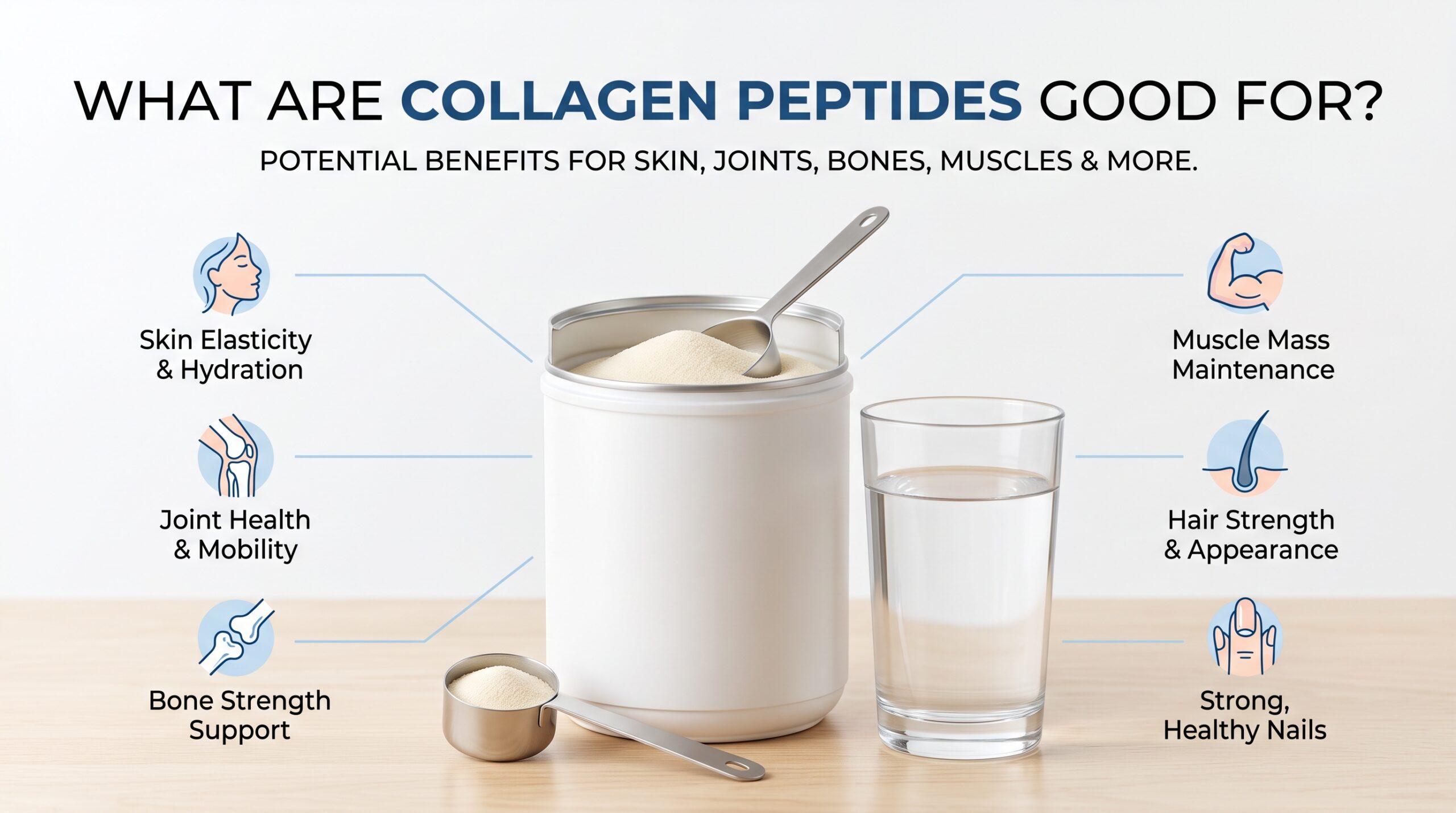
Collagen peptides are small pieces of collagen protein that are commonly used in dietary supplements. They are often marketed for skin, joints, bones, hair, nails, and exercise support. But what does the research actually say?
The short answer is that collagen peptides may be most useful for supporting skin hydration and elasticity, while research also suggests potential benefits for joint comfort, bone health, connective tissue, and some aspects of muscle support. However, results can vary based on the person, product, dose, and length of use. They are a supplement, not a cure or a replacement for a balanced diet.
If you have been wondering what are collagen peptides good for, it helps to understand what collagen is, how hydrolyzed collagen works, and what current research can and cannot tell us. Recent evidence reviews have found promising results for several areas, but researchers also point out that studies use different collagen sources, doses, formulations, and outcome measures.
What Are Collagen Peptides?
Collagen is one of the main structural proteins in the human body. It is found in connective tissues such as skin, bones, cartilage, tendons, ligaments, and other tissues.
Collagen peptides are created by breaking larger collagen proteins into smaller chains of amino acids. This process is commonly called hydrolysis, which is why many supplements use terms such as “hydrolyzed collagen” or “collagen hydrolysate.”
The smaller peptide structure makes collagen easier to dissolve and digest than intact collagen. After digestion, the body absorbs amino acids and small peptides that can then be used in normal protein metabolism.
How Collagen Peptides Are Made
Most collagen supplements begin with collagen-rich animal tissues. Common sources include bovine, porcine, chicken, and marine sources such as fish.
Manufacturers use controlled processing to extract collagen and then break it into smaller peptides. The final product may be dried into a powder or used in capsules, tablets, drinks, or other formulations.
The source matters for people with allergies, dietary restrictions, or personal preferences. For example, marine collagen is generally derived from fish, while bovine collagen comes from cattle.
It is also important to remember that a supplement’s source does not automatically determine how effective it will be. Research has tested different sources and formulations, so product quality and the evidence behind the specific ingredient also matter.
Collagen vs. Collagen Peptides
Regular collagen is a large protein structure. Collagen peptides are smaller fragments produced through hydrolysis.
This difference is important because collagen peptides are designed to be easier to digest and mix into foods and drinks. Once consumed, they are broken down further during digestion and absorption.
In simple terms:
- Collagen: A large structural protein.
- Hydrolyzed collagen: Collagen that has been broken into smaller pieces.
- Collagen peptides: Those smaller collagen-derived protein fragments.
- Gelatin: Another form of processed collagen that has different physical properties.
When people ask what are collagen peptides good for, they are usually asking about the potential effects of these hydrolyzed collagen supplements.
How the Body Uses Collagen Peptides
Your digestive system does not simply send an intact scoop of collagen directly to your skin or joints.
Instead, collagen peptides are digested and absorbed as amino acids and small peptides. These components become part of the body’s normal protein pool. Some collagen-derived peptides may also act as signaling molecules in tissues, although the exact biological effects are still being studied.
The body then uses available amino acids for many different purposes, including producing proteins and maintaining tissues.
What Are Collagen Peptides Good For?
So, what are collagen peptides good for in practical terms?
The main areas studied include skin health, joint health, bone health, connective tissue, and exercise-related support. Some products also claim to improve hair and nails, but the evidence is stronger for certain outcomes than others.
A 2025 umbrella review that combined findings from 16 systematic reviews and 113 randomized controlled trials found favorable associations between collagen supplementation and several skin and musculoskeletal outcomes. At the same time, the researchers noted differences between studies and mixed findings in some areas.
Supporting Skin Health
Skin is one of the most researched areas for oral collagen supplementation.
Collagen provides structural support in the skin. As people age, natural collagen production and skin structure change. Researchers have therefore investigated whether consuming collagen peptides can influence measurable skin characteristics.
A systematic review and meta-analysis of 26 randomized controlled trials found that hydrolyzed collagen supplementation was associated with improvements in skin hydration and elasticity compared with placebo. The authors also noted limitations in the available research and called for larger studies.
More recent research has continued to find the clearest evidence around hydration and elasticity. An updated 2026 systematic review found statistically significant improvements in skin hydration and elasticity, while evidence for structural changes such as wrinkles was less consistent after additional statistical testing.
This means what are collagen peptides good for may have a particularly useful answer when the topic is skin hydration and elasticity.
Skin Elasticity
Skin elasticity describes how well skin returns toward its original shape after being stretched.
Several controlled trials have measured skin elasticity after people used oral collagen products for several weeks. Some studies have reported improvements compared with placebo.
However, collagen supplements should not be viewed as a guaranteed way to prevent wrinkles or reverse skin aging. Skin health also depends on sun exposure, genetics, nutrition, sleep, hydration, and normal aging.
Skin Hydration
Hydration is another area where evidence is relatively encouraging.
The skin has several systems that help retain water and maintain its barrier. Research suggests that oral collagen supplementation may improve measured skin hydration in some people.
Still, drinking enough fluids and using appropriate skin-care products remain important. A collagen supplement should not be treated as a replacement for basic skin care.
Appearance of Fine Lines
Fine lines and wrinkles are commonly mentioned in collagen marketing.
Some clinical trials have reported improvements in wrinkle-related measurements, but newer evidence suggests that findings for wrinkles are less reliable than findings for hydration and elasticity. The latest systematic review found that apparent wrinkle benefits did not remain robust after sensitivity analyses.
Therefore, when asking what are collagen peptides good for, it is more accurate to say they may support certain measurable aspects of skin health rather than promise wrinkle removal.
Supporting Joint Health
Collagen is an important component of connective tissues, including cartilage and tendons.
Because of this, researchers have studied collagen peptides for joint comfort and mobility, especially among people experiencing exercise-related joint discomfort or osteoarthritis symptoms.
An updated systematic review and meta-analysis of 11 randomized controlled trials involving 870 participants found improvements in pain and function among people with knee osteoarthritis who used collagen-based supplements. However, the studies differed considerably, and some outcomes showed substantial statistical heterogeneity.
Another meta-analysis found an association between collagen peptides and reduced knee osteoarthritis pain, although the included trials had limitations, including risk of bias.
These findings help explain why what are collagen peptides good for is often connected with joint support.
Joint Comfort
Some people take collagen peptides as part of a routine intended to support comfortable movement.
The evidence does not mean collagen will repair every joint problem. Joint pain can have many causes, and persistent pain should be evaluated by an appropriate healthcare professional.
Cartilage and Connective Tissue
Cartilage contains collagen and other important substances. Tendons and ligaments also contain large amounts of collagen.
However, eating collagen does not mean that the supplement travels directly to a damaged area and rebuilds it. The body must digest and process the protein.
Research is still developing on how oral collagen affects connective tissues in different situations.
Exercise-Related Joint Support
People who exercise regularly sometimes use collagen peptides as part of their nutrition routine.
Some research suggests collagen may be useful for certain exercise-related joint or connective-tissue outcomes. However, good training technique, gradual progression, adequate sleep, and an overall balanced diet remain much more important foundations for physical health.
Supporting Bone Health
Bone is not simply a mineral structure. Collagen forms an important organic framework within bone, while minerals such as calcium and phosphorus provide much of its hardness.
This is one reason researchers are interested in collagen supplementation and bone health.
Recent evidence reviews have reported favorable findings for bone-related outcomes, but research is still developing and studies vary in design and duration.
It is therefore more accurate to describe collagen peptides as a possible supportive nutrition strategy rather than a treatment for bone disease.
Calcium, vitamin D, adequate protein, physical activity, and other aspects of overall nutrition also play important roles in maintaining healthy bones.
Supporting Muscle and Exercise Recovery
Collagen peptides provide protein and amino acids, so they can contribute to total daily protein intake.
However, collagen is not considered a complete protein in the same way as many common high-quality dietary protein sources. It has a different amino acid profile and is relatively low in some essential amino acids.
This matters when thinking about what are collagen peptides good for in relation to muscle.
Collagen can contribute protein, but it should not automatically replace a balanced protein source such as dairy, eggs, fish, meat, soy, or a well-formulated plant-protein combination.
For people who exercise, collagen may have a role alongside resistance training and adequate overall nutrition. It is not a substitute for training or sufficient total protein.
Supporting Hair and Nail Health
Hair and nails contain structural proteins, which is why collagen products are often marketed for these purposes.
There is some evidence suggesting collagen-related supplementation may support nail strength or growth in specific situations, but the evidence base is much smaller than the evidence for skin outcomes.
Hair-growth claims are even less established.
Hair loss can have many causes, including nutritional deficiencies, genetics, hormonal factors, stress, illness, and certain medical conditions. A supplement should not be assumed to fix the underlying cause.
Therefore, what are collagen peptides good for should not be answered with a strong promise about hair growth.
How Do Collagen Peptides Work?
To understand what are collagen peptides good for, it helps to understand what happens after you consume them.
Collagen peptides are not magic building blocks that automatically become collagen in one specific part of the body. Instead, they enter normal protein metabolism after digestion and may also provide peptide signals that researchers are investigating.
Amino Acids in Collagen
Collagen is especially rich in amino acids such as glycine, proline, and hydroxyproline.
These amino acids are important components of collagen structure.
After digestion, collagen-derived amino acids and peptides can be absorbed and used by the body. The body also gets amino acids from other foods, so collagen supplements are only one possible source.
A varied diet provides many different nutrients and protein sources that collagen alone cannot provide.
Collagen Production and the Body
The human body makes collagen naturally.
This process involves cells called fibroblasts and requires several nutrients. Age, genetics, lifestyle, nutrition, and environmental factors can all affect collagen metabolism.
Taking collagen peptides does not guarantee that the body will make more collagen everywhere. Research suggests that certain collagen peptides may influence collagen-related pathways, but the biological response depends on the tissue and individual.
Why Vitamin C Matters for Collagen Formation
Vitamin C is essential for normal collagen biosynthesis. The National Institutes of Health explains that vitamin C is required for collagen production and is involved in normal protein metabolism.
This is one reason a balanced diet matters when discussing what are collagen peptides good for.
Foods such as citrus fruits, peppers, tomatoes, strawberries, and many other fruits and vegetables can provide vitamin C.
You do not necessarily need a collagen product with added vitamin C if you already get enough vitamin C from your diet.
Potential Benefits of Collagen Peptides
The potential benefits can be summarized into several broad areas.
Skin support: Research most consistently suggests possible improvements in skin hydration and elasticity.
Joint support: Some trials and meta-analyses suggest improvements in joint pain or function, particularly in people with knee osteoarthritis.
Bone support: Collagen is an important part of bone structure, and emerging research suggests supplementation may have potential benefits for some bone outcomes.
Connective tissue support: Collagen is naturally present in tendons, ligaments, cartilage, and other connective tissues.
Protein supplementation: Collagen peptides can add protein to the diet, although they should not be considered a complete replacement for a variety of dietary protein sources.
So, what are collagen peptides good for depends partly on why someone is considering them. The evidence is not equally strong for every advertised benefit.
Are Collagen Peptides Good for Everyone?
Collagen peptides are not automatically necessary for everyone.
Many people can meet their protein and nutrient needs through a varied diet. A supplement may be unnecessary if someone already has a balanced diet and no specific reason to use one.
Who May Consider Collagen Peptides?
Adults sometimes consider collagen supplements when they want an additional source of collagen-derived protein as part of their diet.
People interested in skin hydration, joint comfort, or connective-tissue support may also research collagen peptides because these areas have been studied in clinical trials.
For teenagers, supplements should not be started simply because of social-media claims or advertising. Growing bodies have different nutrition needs, and it is better to discuss any supplement with a parent or guardian and a qualified healthcare professional.
Who Should Talk to a Healthcare Professional First?
Anyone with a medical condition, food allergy, ongoing digestive symptoms, or a medically prescribed diet should ask a healthcare professional before starting a new supplement.
The same applies if someone is taking medications or has been advised to restrict certain nutrients.
Supplements can also contain ingredients other than collagen, so the entire label matters.
Important Allergy and Dietary Considerations
Collagen can come from different animal sources.
Fish-derived collagen may be unsuitable for someone with a fish allergy. Other collagen products may come from cattle, pigs, or chickens.
People following vegetarian or vegan diets should know that conventional collagen supplements are animal-derived.
Always check the source, allergen statement, and full ingredient list.
How to Choose a Collagen Peptide Supplement
When researching what are collagen peptides good for, product quality is just as important as the ingredient itself.
Collagen Source
Look for a product that clearly identifies its collagen source.
Common sources include bovine, porcine, chicken, and marine collagen.
A clear source can help you avoid allergens and choose a product that fits your dietary preferences.
Hydrolyzed Collagen
Hydrolyzed collagen has been processed into smaller peptides.
This is the form commonly used in collagen powders and many other oral collagen supplements.
The terms “hydrolyzed collagen,” “collagen hydrolysate,” and “collagen peptides” are often used for closely related products.
Third-Party Testing
Independent testing can provide additional information about product quality and whether the contents match the label.
Look for transparent information about testing, manufacturing standards, and quality control.
A professional-looking label does not by itself prove that a supplement works.
Ingredients and Added Ingredients
Check whether the product contains sweeteners, flavors, vitamins, minerals, herbal ingredients, or other compounds.
A simple ingredient list may make it easier to understand what you are actually consuming.
Do not assume that a product containing many extra ingredients is automatically better.
Serving Size and Product Quality
Compare the actual collagen amount per serving rather than judging products by container size.
Follow the manufacturer’s label and avoid taking more than recommended simply because you want faster results.
Remember that what are collagen peptides good for cannot be determined from the label alone. Evidence, product quality, individual needs, and realistic expectations all matter.
How to Take Collagen Peptides
There is no single required method for consuming collagen peptides.
Powder, Capsules, and Other Forms
Collagen is available as:
- Powder
- Capsules
- Tablets
- Ready-to-drink products
- Flavored drink mixes
Powder is popular because it can be mixed into drinks and foods.
Capsules may be convenient for people who do not want to mix a powder, although the amount of collagen per capsule can vary.
When to Take Collagen Peptides
There is no strong evidence that everyone needs to take collagen at a specific time of day.
Some products are marketed for morning use, before exercise, or at night. These timing claims are often stronger than the available evidence.
Consistency is generally more practical than focusing on a specific clock time.
If a healthcare professional recommends a particular schedule, follow that advice.
What Can You Mix Collagen Peptides With?
Depending on the product instructions, collagen powder can often be mixed into water, milk, smoothies, yogurt, oatmeal, or other foods.
Avoid using a product in a way that conflicts with its label instructions.
If you have dietary restrictions or allergies, check every ingredient before mixing it with another food or drink.
Are There Any Side Effects?
Collagen supplements are generally well tolerated in clinical studies, but side effects can occur.
Common Side Effects
Some people may experience:
- Mild digestive discomfort
- Bloating
- A feeling of fullness
- Unpleasant taste or aftertaste
The exact experience can vary depending on the product and individual.
If a supplement causes repeated discomfort, it is reasonable to stop using it and discuss the symptoms with a healthcare professional.
Allergic Reactions
Allergic reactions are possible, especially when the collagen comes from a source to which someone is allergic.
Pay close attention to the source and allergen information.
Signs of a serious allergic reaction require urgent medical attention.
When to Stop Using a Supplement
Stop using a supplement and seek appropriate medical advice if you develop concerning symptoms after taking it.
Do not assume that a negative reaction means you should simply lower the dose and continue.
Collagen Peptides vs. Other Protein Supplements
Another useful way to understand what are collagen peptides good for is to compare them with other protein supplements.
Collagen Peptides vs. Whey Protein
Whey protein is derived from milk and provides all essential amino acids.
Collagen peptides have a different amino acid profile and are not a complete protein.
This makes whey more suitable when the main goal is increasing high-quality dietary protein for muscle protein synthesis, while collagen may be considered for its specific amino acid composition and research around connective tissue and skin.
They serve different nutritional purposes.
Collagen Peptides vs. Plant Protein
Plant protein supplements vary widely.
Soy protein is a complete protein, while some other plant proteins may have lower levels of particular essential amino acids. Blended plant proteins can help provide a broader amino acid profile.
Collagen is different because it is an animal-derived structural protein and is not a complete protein.
People choosing between these products should consider their overall diet, protein needs, allergies, dietary pattern, and reason for supplementation.
Which Provides a More Complete Protein Profile?
Collagen does not provide the same complete amino acid profile as whey, milk, egg, soy, or several other high-quality protein sources.
This is important for people who use protein supplements primarily to support muscle growth or meet daily protein needs.
Collagen can contribute protein, but it should generally be viewed as one part of an overall nutrition plan rather than the only protein source.
FAQ
What are collagen peptides good for?
What are collagen peptides good for? They may support skin hydration and elasticity, joint comfort, bone health, and connective tissue. They can also provide protein, although collagen is not a complete protein. Evidence varies by benefit, product, and study design.
Do collagen peptides really work?
Research suggests collagen peptides can have measurable effects in some areas, particularly skin hydration and elasticity. Studies have also reported potential joint benefits. However, results are not guaranteed, and evidence is less consistent for claims such as wrinkle reduction or hair growth.
So, what are collagen peptides good for is better answered with “potentially useful for certain outcomes” than “they work for everything.”
How long does it take for collagen peptides to work?
There is no universal timeline.
Skin studies have often lasted several weeks, with some evidence suggesting that hydration and elasticity changes become more apparent after longer periods of supplementation. One meta-analysis reported significant skin outcomes after eight weeks or more, while newer evidence suggests elasticity effects may be more noticeable after around 12 weeks.
Can you take collagen peptides every day?
Many collagen products are designed for regular daily use, but the appropriate amount depends on the specific product and individual circumstances.
Read the product label and discuss supplements with a healthcare professional when appropriate.
Are collagen peptides good for your skin?
They may be.
Skin hydration and elasticity are among the areas with the most supportive research. Several systematic reviews have reported improvements in these measurements after oral collagen supplementation.
However, collagen supplements are not a replacement for sun protection, balanced nutrition, sleep, and basic skin care.
Are collagen peptides good for joints?
Research suggests they may help with joint comfort and function in some people.
Clinical trials and meta-analyses have reported improvements in knee osteoarthritis symptoms, although the quality and consistency of evidence vary between studies.
Persistent or severe joint pain should not be treated with a supplement alone.
Do collagen peptides help with hair growth?
Evidence for hair growth is limited.
Although collagen is often marketed for hair health, there is not enough strong evidence to say that collagen peptides reliably increase hair growth.
Hair changes can have many causes, so persistent hair loss is better discussed with a qualified healthcare professional.
What is the best time to take collagen peptides?
There is no clearly established “best” time for everyone.
Morning, afternoon, or evening may all be reasonable depending on the product and your routine. Following the label and using the supplement consistently is more practical than focusing on a specific time.
Final Thoughts
So, what are collagen peptides good for?
The strongest answer is that collagen peptides may provide useful support for certain aspects of skin health, especially hydration and elasticity. Research also suggests potential benefits for joint comfort, bone health, connective tissue, and some exercise-related outcomes.
However, collagen peptides are not a cure-all. They do not replace a balanced diet, adequate protein, regular physical activity, good sleep, or appropriate medical care.
The evidence also differs between benefits. Skin hydration and elasticity currently have relatively consistent research support, while claims involving hair growth and dramatic wrinkle reduction are less certain.
When deciding whether collagen is appropriate, consider the source, ingredients, product quality, evidence behind the claimed benefit, and your individual nutritional needs.
Ultimately, what are collagen peptides good for depends on the outcome you are interested in and your overall health. Used appropriately and with realistic expectations, collagen peptides can be one optional part of a broader nutrition and wellness plan.











