

Blog
GHK Cu Serum for Skin: Benefits, Uses, and Tips

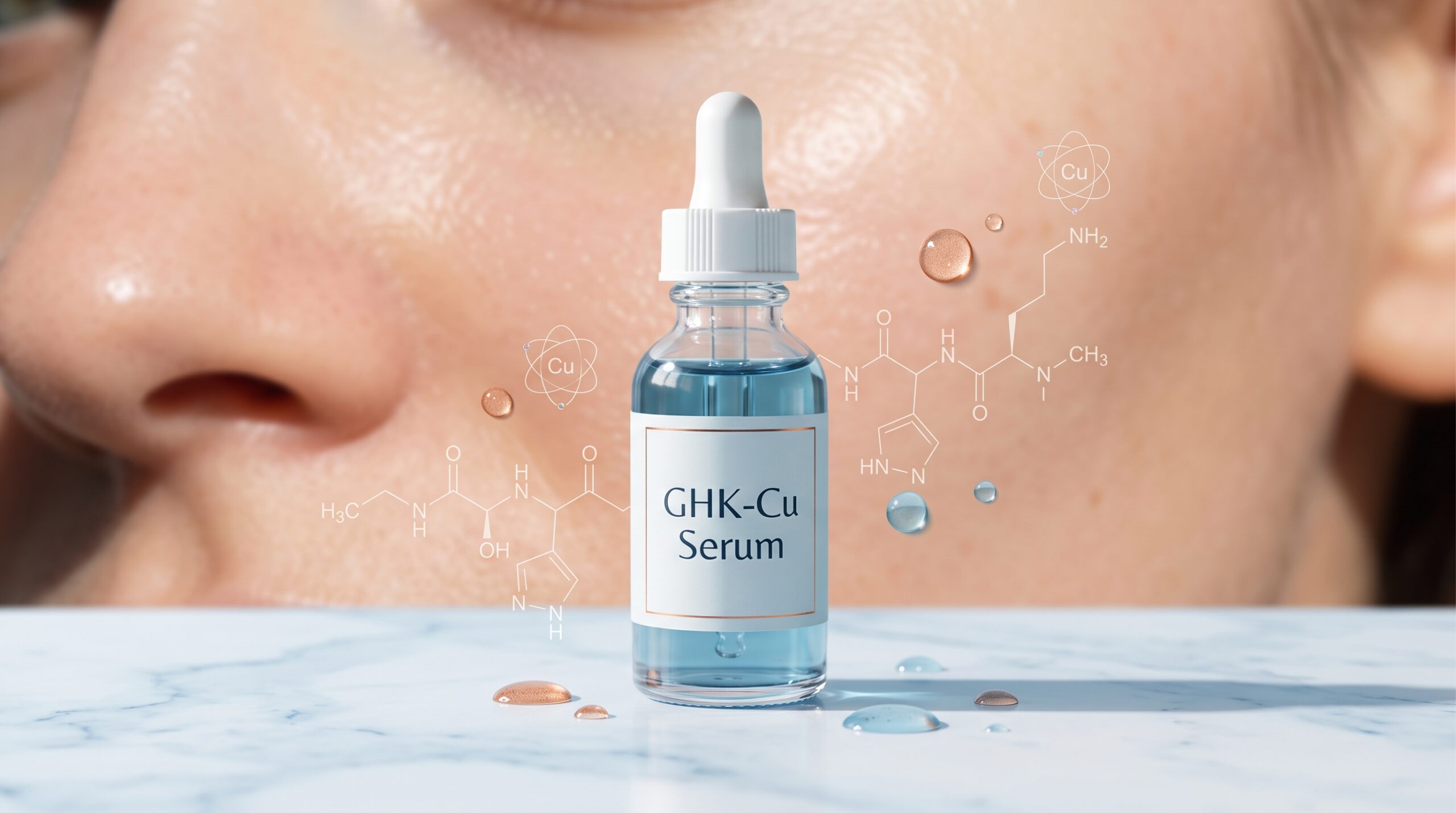
GHK Cu is a copper-binding peptide that has attracted attention in modern skincare. It is also called copper tripeptide-1 and is made from the small peptide GHK, which stands for glycine, histidine, and lysine, combined with copper.
Interest in GHK-Cu serum for skin comes from research suggesting that GHK-Cu may be involved in processes related to collagen, extracellular matrix remodeling, and skin repair. Much of the evidence comes from laboratory, cellular, or preclinical research, while well-controlled human studies on modern topical cosmetic formulations remain limited. A recent review also noted that more clinical research is needed to establish how well topical GHK-Cu works and how effectively it reaches the relevant layers of skin.
That does not mean copper peptides have no value. It means expectations should be realistic.
In this guide, you will learn what GHK-Cu is, what it may do for the appearance of skin, how to use a GHK-Cu serum, which ingredients can be combined with it, which products may be better separated, possible side effects, and how to choose a suitable formula.
What Is GHK-Cu?
Understanding GHK-Cu and Copper Peptides
GHK-Cu is a complex of the tripeptide GHK and copper. GHK is a naturally occurring small peptide that has been studied for its possible role in tissue remodeling and skin-related processes.
In cosmetic products, GHK-Cu is often listed as Copper Tripeptide-1. The copper component is important because GHK can bind copper ions. Researchers have studied this combination because both the peptide and copper are involved in biological processes that may relate to skin structure and repair.
A GHK Cu serum for skin is usually a leave-on cosmetic product containing copper tripeptide-1 in a water-based or gel-like formula.
Copper peptides are different from some other cosmetic peptides because they combine a peptide with a copper ion. Other peptide products may contain signal peptides, carrier peptides, or other peptide structures without copper.
The difference matters because peptide structure can affect how an ingredient behaves in a cosmetic formula and how it interacts with the skin.
How GHK-Cu Works on the Skin
Researchers have investigated GHK-Cu for several skin-supporting processes. Laboratory and preclinical research has linked GHK-Cu with extracellular matrix activity, collagen-related pathways, antioxidant activity, and tissue repair processes.
Collagen is an important structural protein in skin. Elastin helps skin maintain flexibility and bounce. The extracellular matrix provides structural support around skin cells.
GHK-Cu has therefore become interesting in skincare because it may interact with processes involved in maintaining the skin’s structure.
However, applying a peptide to the skin is not the same as injecting it or delivering it directly into deeper tissue. The outer layer of skin is an effective barrier, and peptide penetration can be limited. A recent review specifically highlighted skin permeability as an important challenge for topical GHK and GHK-Cu.
For that reason, a GHK Cu serum for skin should be viewed as a cosmetic skincare product, not as a guaranteed way to change deeper skin biology.
What Are the Potential Benefits of GHK Cu Serum for Skin?
The potential benefits of GHK Cu serum for skin are mainly related to the appearance and feel of the skin.
It is important to separate laboratory findings from proven cosmetic results. Some biological effects have been demonstrated in experimental models, but evidence from large, high-quality human trials of topical GHK-Cu remains limited.
Supports a Smoother-Looking Skin Texture
One reason people use copper peptide products is to support smoother-looking skin.
Fine lines become more noticeable as skin changes with age and environmental exposure. Collagen and other components of the extracellular matrix are important to skin structure.
Research on GHK-Cu has investigated collagen-related activity and wrinkle appearance. However, the strength of evidence varies between studies.
A GHK Cu serum for skin may therefore fit into a routine focused on improving the overall appearance of texture rather than promising to remove wrinkles.
For example, someone may use a peptide serum alongside moisturizer and sunscreen as part of a long-term skin-care routine.
Helps Support Skin Firmness
Skin firmness depends on several factors, including collagen, elastin, hydration, genetics, and age.
GHK-Cu has been studied for its relationship with collagen and extracellular matrix processes. Some research suggests potential effects on skin firmness and elasticity, but more standardized clinical trials are needed.
A GHK Cu serum for skin may therefore be useful for people interested in a peptide-based approach to maintaining the appearance of firm, healthy-looking skin.
It should not be considered a substitute for medical procedures that physically tighten skin.
Supports Skin Repair
GHK-Cu has been studied extensively in relation to tissue remodeling and wound-healing processes.
Experimental research has reported effects involving cell activity, extracellular matrix components, and tissue repair.
This is one reason copper peptides are often discussed in regenerative skincare.
However, there is an important distinction between using a cosmetic serum on intact skin and treating a wound.
Do not apply a GHK Cu serum for skin to an open wound unless the product specifically states it is designed and approved for that use.
For everyday skincare, the more reasonable goal is supporting the appearance of healthy skin rather than attempting to treat an injury.
May Help Improve the Look of Uneven Skin
Skin can look uneven when it is dry, dull, rough, or stressed by the environment.
Hydration, gentle cleansing, sun protection, and regular moisturizing can all influence how skin looks.
GHK-Cu may complement these basics because of its interest in skin-supporting and extracellular matrix processes.
Still, a GHK Cu serum for skin should not be promoted as a guaranteed treatment for dark spots or pigmentation.
If uneven pigmentation is persistent, painful, rapidly changing, or difficult to identify, a dermatologist can help determine the cause and appropriate treatment.
GHK-Cu Serum for Different Skin Types
A GHK Cu serum for skin can potentially fit different skin types, but the overall formulation matters.
The same active ingredient may feel very different depending on the base, preservatives, fragrance, alcohol content, and other ingredients.
GHK-Cu for Dry Skin
Dry skin often benefits from ingredients that support hydration and the skin barrier.
If you have dry skin, consider a GHK-Cu formula that also contains moisturizing ingredients such as humectants or barrier-supporting ingredients.
Hyaluronic acid, glycerin, and ceramides are common examples.
Follow the serum with a moisturizer to reduce water loss and improve comfort.
GHK-Cu for Oily Skin
Oily skin does not necessarily need to avoid peptides.
If your skin produces excess oil, choose a lightweight serum that does not leave a heavy or greasy film.
A simple, water-based formula may feel more comfortable than a rich cream.
If you are acne-prone, look at the entire ingredient list rather than assuming that the GHK-Cu itself is responsible for how a product feels on your skin.
GHK-Cu for Combination Skin
Combination skin has both oily and dry areas.
You can use a lightweight serum across the face and adjust your moisturizer depending on the area.
For example, you might use a lighter moisturizer on an oily T-zone and a richer moisturizer on drier areas.
GHK-Cu for Sensitive Skin
Sensitive skin requires more caution with any new product.
A GHK Cu serum for skin may be suitable for some sensitive-skin users, but individual reactions vary.
Start slowly and patch-test the product before applying it widely.
Also consider the rest of the formula. Fragrance, strong acids, or other potentially irritating ingredients may be more relevant to your reaction than the copper peptide itself.
Laboratory research has found relatively low irritation potential for GHK-Cu compared with certain simple copper salts, but laboratory findings cannot guarantee that every person will tolerate every cosmetic formula.
How to Use GHK-Cu Serum
Using a GHK Cu serum for skin does not need to make your routine complicated.
The most important point is to follow the instructions provided by the specific manufacturer.
When to Apply GHK-Cu Serum
Apply your serum after cleansing and before moisturizer, unless the product directions recommend another order.
A simple sequence is:
- Cleanse your skin.
- Pat the skin dry or leave it slightly damp if appropriate for the product.
- Apply the GHK-Cu serum.
- Allow it to settle.
- Apply moisturizer.
- Use sunscreen in the morning.
The exact order can vary when several treatment products are involved.
How Much Serum to Use
You generally do not need a large amount.
A few drops are often enough for the face, depending on the product and dispenser.
Using more serum does not automatically produce better results. It may instead increase waste or, with some formulations, increase the chance of irritation.
Always follow the label.
How Often Should You Use It?
Some products are designed for daily use, while others may recommend less frequent application.
If you are new to copper peptides, starting with a lower frequency can make it easier to see how your skin responds.
For example, you could begin according to the manufacturer’s recommended introductory schedule and increase only if your skin remains comfortable.
Consistency is generally more useful than repeatedly changing products.
What to Apply After GHK-Cu Serum
A moisturizer is a simple next step.
In the morning, sunscreen should be the final major skincare step.
Daily sun protection is especially important if your goal is maintaining an even, healthy-looking complexion because ultraviolet exposure contributes to visible skin aging.
GHK-Cu Serum in a Skincare Routine
A GHK Cu serum for skin works best as one part of a simple routine rather than as the entire routine.
Morning Skincare Routine
A practical morning routine can look like this:
1. Cleanser
Use a gentle cleanser to remove sweat, oil, and overnight buildup.
2. GHK-Cu serum
Apply the amount recommended on the product label.
3. Moisturizer
Choose one that matches your skin type.
4. Sunscreen
Use a broad-spectrum sunscreen and reapply as directed, especially during extended outdoor exposure.
The sunscreen step is important because no peptide serum can replace protection from ultraviolet radiation.
Evening Skincare Routine
An evening routine can be even simpler:
1. Cleanser
Remove sunscreen, makeup, dirt, and excess oil.
2. GHK-Cu serum
Apply your copper peptide product according to its directions.
3. Moisturizer
Finish with a moisturizer that supports comfortable skin.
A simple routine is often easier to maintain than a routine containing many active ingredients.
What Ingredients Can You Use With GHK-Cu?
The compatibility of GHK Cu serum for skin with other ingredients depends on the formulation.
GHK-Cu and Hyaluronic Acid
Hyaluronic acid is commonly used as a hydrating ingredient.
There is no general reason that a properly formulated GHK-Cu serum cannot be part of a routine that also contains hyaluronic acid.
A simple approach is to use the peptide serum followed by a hyaluronic-acid-containing moisturizer or serum, depending on the product directions.
If both are separate serums, follow the manufacturer’s instructions for layering.
GHK-Cu and Niacinamide
Niacinamide is another popular skincare ingredient.
It is used in products designed to support the skin barrier and improve the appearance of uneven tone and texture.
A GHK-Cu product and niacinamide product may be used in the same overall routine if both formulas are tolerated.
However, introducing several new products at once makes it difficult to know which product caused irritation.
Introduce new products one at a time when possible.
GHK-Cu and Ceramides
Ceramides are lipids naturally associated with the skin barrier.
A moisturizer containing ceramides can be a useful partner for a peptide serum, particularly if your skin is dry or easily irritated.
Using a GHK Cu serum for skin with a basic barrier-supporting moisturizer can create a straightforward routine without relying on many active ingredients.
Ingredients to Consider Separating From GHK-Cu
There is not one universal rule that every copper peptide product must be kept away from every other active.
Instead, product formulation and manufacturer instructions matter.
GHK-Cu and Strong Acids
Strong exfoliating acids can increase the risk of irritation when used too frequently.
Examples include high-strength alpha hydroxy acids and beta hydroxy acids.
If your skin becomes irritated when multiple active products are layered, consider using the products at different times or on different days.
This approach can also make your routine easier to understand.
GHK-Cu and Retinoids
Retinoids are powerful skincare ingredients that can cause dryness and irritation, especially when someone first starts using them.
There is no need to assume that copper peptides and retinoids are universally incompatible.
However, using several active products at the same time can make irritation harder to manage.
If your product manufacturer recommends separating them, follow those directions.
For sensitive skin, using a GHK Cu serum for skin at a different time from a retinoid may be a practical way to simplify the routine.
Why Product Instructions Matter
Cosmetic formulations are not identical.
The pH, preservatives, solvents, concentrations, packaging, and additional active ingredients can all differ.
That means general internet advice should not override the instructions on your specific product.
If the manufacturer gives a particular storage or layering recommendation, follow it.
Are There Side Effects of GHK-Cu Serum?
Like any cosmetic product, a GHK Cu serum for skin can potentially cause an unwanted reaction.
Research on GHK-Cu itself has suggested relatively low irritation potential in certain laboratory models, but human tolerance depends on the full formulation and the individual.
Possible Skin Irritation
Some users may experience temporary irritation after introducing a new skincare product.
Possible symptoms include:
- Stinging
- Burning
- Itching
- Dryness
- Tightness
- Redness
These symptoms are not proof that a product is working.
If a product causes significant discomfort, continuing to use it is not a good way to test its effectiveness.
Redness or Sensitivity
Redness can happen when the skin does not tolerate an ingredient or the overall formula.
If you already have sensitive skin, start cautiously.
Avoid introducing several new active products at the same time.
When to Stop Using a Product
Stop using a cosmetic product if it causes a significant or persistent reaction.
If you develop severe swelling, difficulty breathing, widespread hives, blistering, or another serious reaction, seek urgent medical care.
For persistent skin problems, a dermatologist can help identify the cause.
Patch Testing Before Regular Use
Patch testing can be a useful precaution when introducing a new cosmetic.
Apply a small amount to a limited area according to the product’s directions and observe how your skin responds.
A patch test does not guarantee that you will never react to a product, but it can provide an additional safety check.
How to Choose a GHK-Cu Serum
Choosing a GHK Cu serum for skin is about more than finding the highest percentage on a label.
Check the Ingredient List
Look for the ingredient name used by the manufacturer.
Copper tripeptide-1 is a common cosmetic name associated with GHK-Cu.
Also review the rest of the ingredient list.
A product may contain fragrance, exfoliating acids, botanical extracts, or other active ingredients that affect how well your skin tolerates it.
Consider the Product’s Formulation
The complete formula matters.
A well-designed cosmetic needs to keep its ingredients stable enough for the intended shelf life and use.
Peptides can present formulation challenges, and research has highlighted stability and permeability as important considerations for topical GHK-Cu products.
A complicated ingredient list is not automatically better.
Look for Clear Usage Instructions
A reliable product should provide clear information about:
- How much to use
- How often to use it
- Where to apply it
- Storage requirements
- Warnings
- Ingredients
- Manufacturer information
Be cautious about products that make dramatic promises without explaining how the product should be used.
Packaging and Storage
Peptide products may be sensitive to environmental conditions.
Light, heat, air, and repeated exposure can affect some cosmetic ingredients.
Use the storage instructions on the label.
Do not automatically assume that refrigeration is necessary unless the manufacturer recommends it.
A GHK Cu serum for skin should also be kept closed when not in use.
GHK-Cu Serum vs. Other Peptide Serums
Peptide serums are not all the same.
GHK-Cu vs. General Peptide Serums
GHK-Cu is a specific copper-associated peptide.
Other peptide serums may contain different peptides designed for different cosmetic purposes.
Some peptides are marketed for supporting the appearance of fine lines, while others are used for moisturizing or skin-conditioning formulas.
The name “peptide serum” therefore does not tell you exactly how a product works.
GHK-Cu vs. Collagen-Focused Skincare
Collagen-focused skincare may contain peptides, antioxidants, moisturizers, or other ingredients intended to improve the appearance of aging skin.
GHK-Cu is interesting because research has investigated its connection with collagen and extracellular matrix processes.
However, topical GHK-Cu should not be confused with taking collagen supplements or undergoing medical procedures.
Each approach has different evidence and limitations.
Choosing Based on Your Skincare Goals
Start with your actual goal.
If your main concern is dryness, a barrier-focused moisturizer may be more important.
If your goal is daily protection from visible aging, sunscreen should be a priority.
If you want to add a peptide product, GHK-Cu can be one option to consider.
The best routine is usually the one you can use consistently without irritating.
How Long Does GHK-Cu Serum Take to Work?
There is no single timeline that applies to every GHK Cu serum for skin.
Results depend on the product formulation, frequency of use, skin type, age, environmental exposure, and the specific concern being addressed.
Some skincare changes, such as improved hydration, can be noticed relatively quickly.
Changes involving skin texture or the appearance of fine lines generally take longer.
Clinical research on topical GHK-Cu remains limited, and studies have used different formulations and methods. A recent systematic review found only a small number of randomized controlled trials among the available literature and emphasized the need for larger, standardized clinical studies.
Why Results Can Vary
Two people can use the same serum and experience different results.
Factors include:
- Skin type
- Age
- Existing skincare routine
- Sun exposure
- Product formulation
- Frequency of use
- Overall skin health
- Individual sensitivity
Consistent Skincare Use
Using a product consistently is more useful than applying a large amount occasionally.
A simple routine that includes cleansing, moisturizing, sun protection, and an appropriate active ingredient is easier to maintain.
Realistic Expectations
Do not expect a copper peptide serum to transform your skin overnight.
Think of it as one supportive part of a long-term skincare routine.
If a product promises dramatic changes in a few days, it is reasonable to look carefully at the evidence behind those claims.
FAQ
What does GHK-Cu serum do for skin?
A GHK Cu serum for skin is a cosmetic peptide product designed to support the appearance of healthy-looking skin.
GHK-Cu has been studied for collagen-related activity, extracellular matrix remodeling, and tissue repair processes. However, much of the research is preclinical, and evidence from large human studies of topical cosmetic formulations is still limited.
Is GHK-Cu serum good for aging skin?
A GHK Cu serum for skin may be useful in an anti-aging skincare routine because GHK-Cu has been investigated for its relationship with collagen, elasticity, wrinkles, and skin remodeling.
However, it should not be considered a guaranteed anti-aging treatment.
Daily sunscreen, gentle skincare, adequate moisturization, and other evidence-based treatments can also play important roles.
Can I use GHK-Cu serum every day?
Some products are designed for daily use.
Whether you should use your particular serum every day depends on its formulation and the manufacturer’s instructions.
If you are new to the ingredient or have sensitive skin, introducing it gradually may be more comfortable.
Can GHK-Cu help with skin firmness?
GHK-Cu has been studied for collagen and extracellular matrix processes that are relevant to skin firmness. Some clinical and preclinical research suggests potential benefits, but the evidence base is still developing.
Therefore, it is better to describe a GHK Cu serum for skin as potentially supporting the appearance of firmness rather than guaranteeing a tightening effect.
Can GHK-Cu serum be used on sensitive skin?
It may be tolerated by some people with sensitive skin, but individual reactions vary.
Use a gentle formula, follow the manufacturer’s instructions, and patch-test before regular use.
If you experience persistent burning, swelling, or significant redness, discontinue the product and seek professional advice if needed.
Should I use GHK-Cu serum in the morning or at night?
It depends on the product instructions.
A GHK Cu serum for skin can fit into either a morning or evening routine when the formulation is intended for that use.
If used during the day, sunscreen should still be part of the routine.
Can GHK-Cu be used with hyaluronic acid?
GHK-Cu and hyaluronic acid can generally fit into the same skincare routine when the products are formulated for compatible use.
Hyaluronic acid is mainly used for hydration, while GHK-Cu is a peptide ingredient.
If using separate serums, follow the directions for both products.
How should GHK-Cu be stored?
Follow the manufacturer’s storage instructions.
Keep the product closed and protect it from conditions listed on the label, such as excessive heat or direct sunlight.
Do not assume that every copper peptide product requires refrigeration.
Final Thoughts
A GHK Cu serum for skin is a peptide-based cosmetic product that has gained attention because of research into GHK-Cu and its possible role in collagen-related activity, extracellular matrix remodeling, and skin repair.
The science is promising in some areas, but it is important to keep the evidence in perspective. A 2025 review noted that despite widespread cosmetic use, there is still a shortage of strong clinical evidence for topical GHK-Cu, while a 2026 systematic review found encouraging preclinical findings but emphasized the limited number and variability of controlled clinical studies.
For everyday skincare, the most sensible approach is to keep your routine simple.
Cleanse gently, use your peptide serum according to the product directions, moisturize, and protect your skin from the sun. Introduce new products gradually and patch-test when appropriate.
In short, GHK Cu serum for skin may help support smoother, firmer-looking, and healthier-looking skin, but it should be viewed as one part of a consistent skincare routine rather than a guaranteed solution for wrinkles, pigmentation, or skin aging.











