

Blog
Are Peptides Steroids? Key Differences Explained Clearly

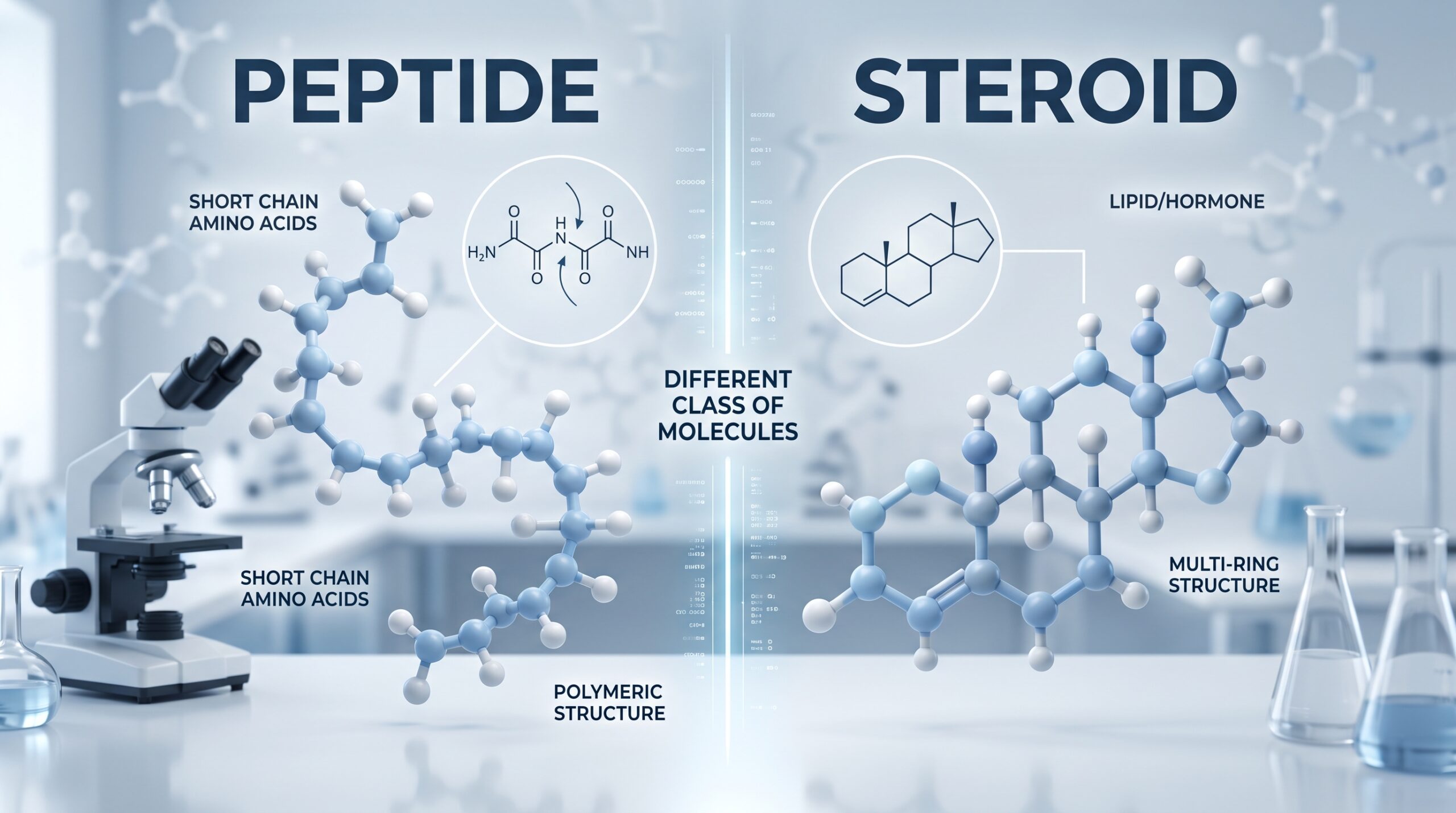
If you have searched are peptides steroids, you are not alone. Peptides and steroids are often mentioned together in fitness, bodybuilding, medicine, and anti-aging discussions. This can make it difficult to understand whether they are actually the same type of substance.
The short answer is no. Peptides are not steroids.
Peptides and steroids are chemically different groups of compounds. Peptides are made from chains of amino acids joined by peptide bonds. Steroids have a different chemical structure built around a characteristic multi-ring carbon framework.
They can also work in very different ways in the body. Some peptides act as hormones or signaling molecules. Steroids include several natural and synthetic substances, including corticosteroids and anabolic-androgenic steroids.
This distinction matters because the word “steroid” is often used to mean anabolic steroids in fitness conversations. But medically, steroids are a much broader chemical family.
So, are peptides steroids? No. They are different substances with different structures, mechanisms, uses, and safety considerations.
This guide explains the differences between peptides and steroids, how they work, whether peptides can affect muscle growth, how their safety profiles differ, and why the two are sometimes confused.
Are Peptides Steroids?
The Short Answer
Are peptides steroids? No.
Peptides are molecules made from amino acids. The National Library of Medicine’s Medical Subject Headings describes peptides as compounds made from amino acids joined by peptide bonds.
Steroids belong to a different chemical family. They have a characteristic ring-based structure and include substances such as cholesterol, steroid hormones, and synthetic steroid medicines.
The two groups can both have strong effects on the body, but that does not make them the same.
For example, insulin is a peptide hormone. Testosterone is a steroid hormone. Both are hormones, but their molecular structures are very different.
This is one of the easiest ways to understand the peptides vs steroids question: two substances can both affect hormones, muscles, metabolism, or other body functions without belonging to the same chemical class.
What Makes Peptides Different From Steroids?
The biggest difference is their chemical structure.
Peptides are built from amino acids. A peptide bond connects one amino acid to another, creating a chain. Depending on the peptide, that chain can contain only a few amino acids or many more.
Steroids have a different structure based on fused carbon rings. Are peptides safe? This structure is common to many steroid compounds, although individual steroids have different side groups and biological effects.
Their mechanisms can also differ.
A peptide may bind to a receptor on a cell surface and trigger a signaling response. Many steroid hormones can pass through cell membranes and interact with intracellular receptors, although the exact mechanism depends on the steroid.
So, when asking are peptides steroids, it helps to separate three ideas:
- Chemical structure: Peptides are amino acid chains; steroids have a ring-based structure.
- Biological action: They can affect the body through different pathways.
- Medical use: Both groups include medicines, but their uses are not interchangeable.
Why Peptides and Steroids Are Sometimes Confused
Peptides and steroids are sometimes confused because both appear in conversations about fitness, hormones, muscle growth, recovery, and performance.
Some peptide compounds are promoted online for bodybuilding or physical performance. At the same time, anabolic steroids have a long history of misuse for increasing muscle mass and improving athletic performance.
This overlap in marketing can make two very different categories seem similar.
Another source of confusion is that some peptides influence hormone signaling. A peptide that affects a hormone pathway is still a peptide. It does not become a steroid simply because it has hormonal effects.
The same principle works in reverse. A steroid hormone remains a steroid even if it affects muscle, metabolism, or another physiological system.
What Are Peptides?
Peptide Definition
A peptide is a molecule made from amino acids linked by peptide bonds.
Amino acids are the basic building blocks used to make proteins and many peptides. Different sequences of amino acids create different peptides with different structures and functions.
Some peptides occur naturally in the human body.
For example, certain hormones and signaling molecules are peptides. Other peptides are produced during the breakdown of proteins.
Scientists can also manufacture peptides in laboratories. Synthetic peptides may be used in medicine, research, nutrition, or cosmetic products.
The term “peptide” therefore covers a very broad group of molecules.
How Peptides Are Made
Peptides are formed when amino acids are connected through peptide bonds.
Cells can produce peptides through biological processes. A larger precursor molecule may sometimes be processed into smaller active peptides.
Researchers can also make peptides through laboratory methods that control the order of amino acids.
The sequence matters because it helps determine how the peptide behaves.
A simple analogy is a string of letters. Changing the order of letters can create a different word. Similarly, changing the amino acid sequence can create a different peptide with different biological properties.
This is another reason the answer to are peptides steroids is clearly no. Peptides and steroids are built from fundamentally different chemical frameworks.
How Peptides Work in the Body
Peptides can have many functions.
Some act as hormones. Others send signals between cells or interact with receptors, enzymes, or other biological molecules.
For example, GLP-1 is a peptide hormone involved in blood glucose regulation, digestion, and appetite. Insulin is another peptide hormone that plays a major role in blood glucose control.
Other peptides have roles in immune defense or tissue-related processes.
Because peptides can interact with specific biological targets, researchers have developed peptide-based medicines for several medical conditions.
Their effects depend on the exact peptide.
There is no single “peptide effect” that applies to every peptide.
What Are Steroids?
Steroid Definition
Steroids are a broad family of compounds with a characteristic carbon-ring structure.
The steroid family includes naturally occurring molecules such as cholesterol and steroid hormones, as well as many synthetic compounds.
This is important because “steroids” does not automatically mean anabolic steroids.
Corticosteroids, for example, are steroid medicines used for their anti-inflammatory and immune-modulating effects.
Anabolic-androgenic steroids are another group. They are synthetic derivatives related to testosterone and have both anabolic effects, such as promoting muscle growth, and androgenic effects related to male sexual characteristics.
How Steroids Work in the Body
Steroids can work through steroid receptors and other biological pathways.
Many steroid hormones can cross cell membranes because of their chemical properties. They can interact with receptors inside cells and influence gene expression.
However, not all steroids have the same mechanism or effect.
Corticosteroids and anabolic steroids, for example, act on different pathways and have different medical purposes.
This is why it is useful to distinguish between the broad steroid family and anabolic steroids specifically.
Different Types of Steroids
Several major categories of steroids exist.
Corticosteroids are steroid hormones or medicines involved in processes such as inflammation and immune regulation.
Sex steroids include hormones such as testosterone, estrogen, and progesterone.
Anabolic-androgenic steroids are synthetic substances related to testosterone. They have both anabolic and androgenic activity.
Cholesterol and related compounds are also part of the broader steroid family.
So, if someone says “steroids,” it is useful to ask what type they mean.
A doctor discussing corticosteroid treatment is talking about something very different from an athlete discussing anabolic steroid misuse.
Peptides vs. Steroids: Key Differences
Chemical Structure
The most basic difference between peptides and steroids is their molecular structure.
Peptides consist of amino acid chains connected by peptide bonds.
Steroids have a characteristic multi-ring carbon structure.
This difference can be compared to the difference between a necklace made from individual beads and a rigid framework made from connected rings. They are built differently and therefore have different chemical properties.
How They Act in the Body
Peptides and steroids can both act as signaling molecules, but their mechanisms can differ.
Many peptide hormones bind to receptors on the surface of cells and activate signaling pathways inside the cell.
Many steroid hormones can enter cells and bind to receptors inside the cell, influencing gene activity.
However, biology is complex, and not every peptide or steroid follows exactly the same pattern.
The important point is that the two classes are not interchangeable.
Common Medical Uses
Peptides have many medical applications.
Examples include insulin and several other peptide-based medicines. Some peptide drugs are designed to mimic or modify naturally occurring hormones or signaling molecules.
Steroid medicines also have many medical applications.
Corticosteroids may be used to reduce inflammation or modify immune activity. Certain anabolic steroids have approved medical uses for specific hormone-related conditions.
The fact that both groups contain medicines does not make them equivalent.
How They Are Administered
Both peptides and steroids can be administered in different ways, depending on the specific substance.
Peptide medicines may be injected because many peptides can be broken down in the digestive tract.
Some peptide-related products are available in other formulations, depending on the medicine.
Steroid medicines can also come in several forms, including tablets, creams, inhaled medicines, injections, and other formulations.
The route of administration affects how a substance enters the body, how long it remains active, and what side effects may occur.
Do Peptides Build Muscle Like Steroids?
Peptides and Muscle-Related Research
Some peptides have been studied for their effects on growth-related pathways, metabolism, or tissue processes.
This has led to interest in peptides among athletes and bodybuilders.
However, research interest does not mean that every peptide has been shown to increase muscle mass or improve athletic performance in humans.
Some peptides sold online for bodybuilding may not be approved for human use, and their quality and safety can be uncertain.
The term “peptide” itself does not tell you whether a substance builds muscle.
The specific peptide, its mechanism, evidence, dose, and regulatory status all matter.
Anabolic Steroids and Muscle Growth
Anabolic-androgenic steroids are directly related to testosterone and can promote skeletal muscle growth.
This is one reason they have been misused by athletes and bodybuilders seeking greater muscle size or performance.
However, misuse carries significant health risks.
The National Institute on Drug Abuse reports that anabolic steroid misuse can be associated with cardiovascular problems, hormonal effects, liver problems, psychiatric effects, skin problems, and other health consequences.
These risks can be serious and, in some cases, long-lasting.
Why Their Effects Should Not Be Equated
It is tempting to assume that a peptide marketed for muscle growth is simply a “safer steroid.”
That conclusion is not supported by the word peptide alone.
A peptide and an anabolic steroid can affect different biological pathways.
Their benefits, risks, evidence, and legal status can also differ.
Some peptides may have no meaningful muscle-building effect at all. Others may be under investigation for specific medical applications.
Therefore, peptides vs steroids should be treated as a comparison between two broad and diverse classes rather than a simple comparison of two muscle-building products.
Are Peptides Safer Than Steroids?
Why Safety Depends on the Specific Substance
There is no universal answer to whether peptides are safer than steroids.
That comparison is too broad.
Some peptide medicines have been extensively studied and approved for specific medical uses. Some peptide products sold online have little reliable human safety data.
Similarly, some steroid medicines are approved and commonly used under medical supervision, while anabolic steroid misuse can cause serious health problems.
Safety depends on:
- The exact substance
- The dose
- The route of administration
- Product quality
- Duration of use
- The person’s health
- Other medications
- Whether the product is approved or regulated
This is why the phrase “peptides are safe” can be just as misleading as “all steroids are dangerous.”
Potential Side Effects of Peptides
Peptide side effects vary greatly.
A peptide medicine may cause effects related to its specific biological target.
For example, some GLP-1 receptor agonist medicines can cause gastrointestinal symptoms such as nausea, vomiting, diarrhea, constipation, or abdominal discomfort.
Other peptide medicines have different side effects.
Unregulated peptide products can add another layer of risk because the actual contents, concentration, purity, and sterility may not be reliable.
A product labeled “peptide” should not automatically be considered safe.
Potential Risks of Anabolic Steroids
Anabolic steroid misuse can have significant health effects.
Reported risks include:
- High blood pressure
- Changes in cholesterol
- Cardiovascular disease
- Hormonal disruption
- Reduced sperm production
- Testicular shrinkage
- Liver problems
- Acne and skin changes
- Mood and psychiatric effects
- Tendon injuries
NIDA also reports risks involving heart attacks, strokes, liver tumors, kidney problems, and other serious consequences associated with anabolic steroid misuse.
The risk depends on the specific substance, dose, duration, and pattern of use.
Importance of Medical Supervision
Medical supervision is important for substances that affect hormones or other major biological pathways.
A healthcare professional can determine whether a treatment is appropriate and monitor for side effects.
This is particularly important when a substance is injected, affects blood glucose, changes hormone levels, or has potential interactions with other medicines.
Medical supervision also helps distinguish an approved treatment from an unregulated product marketed for similar purposes.
Peptides and Steroids in Medicine
Approved Peptide-Based Treatments
Peptide-based medicines are used in several areas of healthcare.
Insulin is one well-known example.
Other peptide medicines include certain treatments that act on metabolic hormones, hormones involved in bone health, or other biological pathways.
Some peptide medicines have been developed by modifying naturally occurring peptides so that they remain active longer or have specific therapeutic properties.
The medical use of a peptide depends on the specific drug and its approved indication.
Medical Uses of Steroids
Steroids are also widely used in medicine.
Corticosteroids are used for conditions involving inflammation and immune activity.
Examples include medicines such as prednisone, hydrocortisone, and dexamethasone.
Anabolic steroids have more specific medical applications. They may be prescribed for certain conditions involving inadequate androgen production or delayed puberty, depending on the medicine and jurisdiction.
Medical steroid use is therefore very different from non-medical anabolic steroid use for bodybuilding.
Prescription vs. Unregulated Products
One of the most important distinctions is between regulated medical products and unverified products.
A prescription medicine has a defined formulation, dose, manufacturing process, and approved use.
An online product marketed as a “research peptide” may not meet the same standards.
The same concern applies to steroids purchased from unofficial sources.
A label alone does not prove purity, concentration, sterility, or safety.
For medically active substances, obtaining products through legitimate healthcare and pharmacy channels can reduce risks related to counterfeit or contaminated products.
Common Misconceptions About Peptides and Steroids
“All Peptides Are Performance Enhancers”
This is false.
Peptides are a huge and diverse group of molecules.
Some are involved in normal biological functions. Some are used in medicine. Others are studied in research.
Only a subset has any connection to physical performance or muscle growth.
For example, insulin is a peptide hormone with a central role in glucose regulation. Calling all peptides performance enhancers would ignore their many other functions.
“Peptides and Steroids Work the Same Way”
They do not.
Peptides and steroids have different chemical structures and can interact with the body through different pathways.
Some peptide hormones primarily activate receptors on cell surfaces. Many steroid hormones interact with receptors inside cells.
There are exceptions and additional layers of biology, but the basic distinction remains.
This is why are peptides steroids has a straightforward scientific answer: no.
“Natural Means Completely Safe”
Natural does not mean risk-free.
Many substances found naturally in the body or environment can be harmful at the wrong dose or in the wrong circumstances.
The same principle applies to peptides.
A naturally occurring peptide can have powerful biological effects.
Synthetic substances can also be safe when properly developed, manufactured, studied, and used for an appropriate purpose.
Safety depends on evidence and context, not simply on whether something is natural.
Frequently Asked Questions
Are peptides steroids?
No. Peptides are not steroids.
Peptides are made from amino acids linked by peptide bonds, while steroids have a characteristic ring-based chemical structure.
They can both influence biological processes, but they belong to different chemical classes.
Are peptides anabolic steroids?
No.
Anabolic steroids are synthetic substances related to testosterone. Peptides are amino acid-based compounds.
Some peptides may be marketed for muscle growth or athletic performance, but that does not make them anabolic steroids.
The question are peptides anabolic steroids can therefore be answered directly: no, although some products may be discussed in similar fitness contexts.
Do peptides contain steroids?
A peptide does not inherently contain steroids.
Peptides and steroids are separate chemical categories.
However, a commercial product could theoretically contain multiple active ingredients, depending on how it was manufactured. This is one reason product quality and labeling matter.
If a product is not from a reliable source, you cannot assume that its contents match its marketing claims.
Are peptides used for muscle growth?
Some peptides have been studied for effects on growth-related or metabolic pathways, and some are marketed for muscle-related purposes.
However, evidence varies greatly between individual peptides.
A peptide should not be assumed to increase muscle mass simply because it is marketed to athletes.
Anabolic steroids, by contrast, are specifically related to testosterone and can promote skeletal muscle growth.
Are peptides safer than steroids?
There is no universal answer.
Some approved peptide medicines have well-established safety profiles when used as directed.
Some unapproved peptide products have limited safety data and uncertain quality.
Steroids also vary. Some are legitimate medicines, while anabolic steroid misuse can carry serious health risks.
The specific substance and how it is used matter more than the broad label.
Can peptides have side effects?
Yes.
Peptides can have side effects because they can interact with biological systems.
The effects depend on the specific peptide.
Some peptide medicines can cause gastrointestinal symptoms, injection-site reactions, changes in appetite, or other effects.
Unregulated products may also carry risks related to contamination, incorrect dosing, or unknown ingredients.
Can steroids be used safely?
Some steroid medicines can be used safely when prescribed for an appropriate medical condition and taken as directed.
This does not mean that non-medical anabolic steroid use is safe.
Anabolic steroid misuse has been associated with cardiovascular, hormonal, liver, kidney, psychiatric, and other health risks.
Why do people confuse peptides and steroids?
The confusion often comes from fitness marketing.
Both terms appear in discussions about muscle, hormones, recovery, and performance.
Some peptides are marketed to people interested in bodybuilding, while anabolic steroids have a well-known history of non-medical performance use.
But similar marketing does not mean the substances are chemically or biologically the same.
Are peptides hormones?
Some peptides are hormones, but not all peptides are hormones.
A peptide is defined by its molecular structure. A hormone is defined by its role as a signaling molecule produced by the body or used to influence physiological processes.
Insulin and GLP-1 are examples of peptide hormones.
Other peptides have different functions.
Are steroids hormones?
Some steroids are hormones.
Examples include testosterone, estrogen, progesterone, cortisol, and aldosterone.
But not every steroid is a hormone. The steroid family also includes compounds such as cholesterol and various synthetic steroid medicines.
Conclusion
So, are peptides steroids? No. Peptides and steroids are two different classes of compounds with different chemical structures.
Peptides are made from amino acids connected by peptide bonds. Steroids have a characteristic ring-based structure.
Their biological actions can also differ. Peptides may act as hormones, signaling molecules, or therapeutic agents. Steroids include several groups, such as corticosteroids and anabolic-androgenic steroids, each with distinct effects.
The confusion often comes from fitness and bodybuilding discussions. Some peptides are marketed for muscle-related purposes, while anabolic steroids are known for their ability to promote skeletal muscle growth. But these substances should not be treated as interchangeable.
The question are peptides steroids is also important when considering safety.
Neither category can be labeled simply as “safe” or “unsafe.” An approved medicine used under appropriate medical supervision is very different from an unregulated product purchased online. The specific substance, dose, route, product quality, medical purpose, and individual health all influence risk.
Anabolic steroid misuse can cause serious cardiovascular, hormonal, liver, kidney, psychiatric, and other health problems. Peptide products can also have side effects, especially when they are medically active or poorly manufactured.
The simplest way to remember the difference is this:
Peptides are amino acid chains. Steroids are ring-structured compounds. They are not the same thing.
So if you are comparing peptides vs steroids, look beyond marketing terms. Identify the exact substance, understand how it works, check the evidence and regulatory status, and seek qualified medical advice when considering a medically active product.











