

Blog
How to Reconstitute Peptides: Safety Guide & Basics

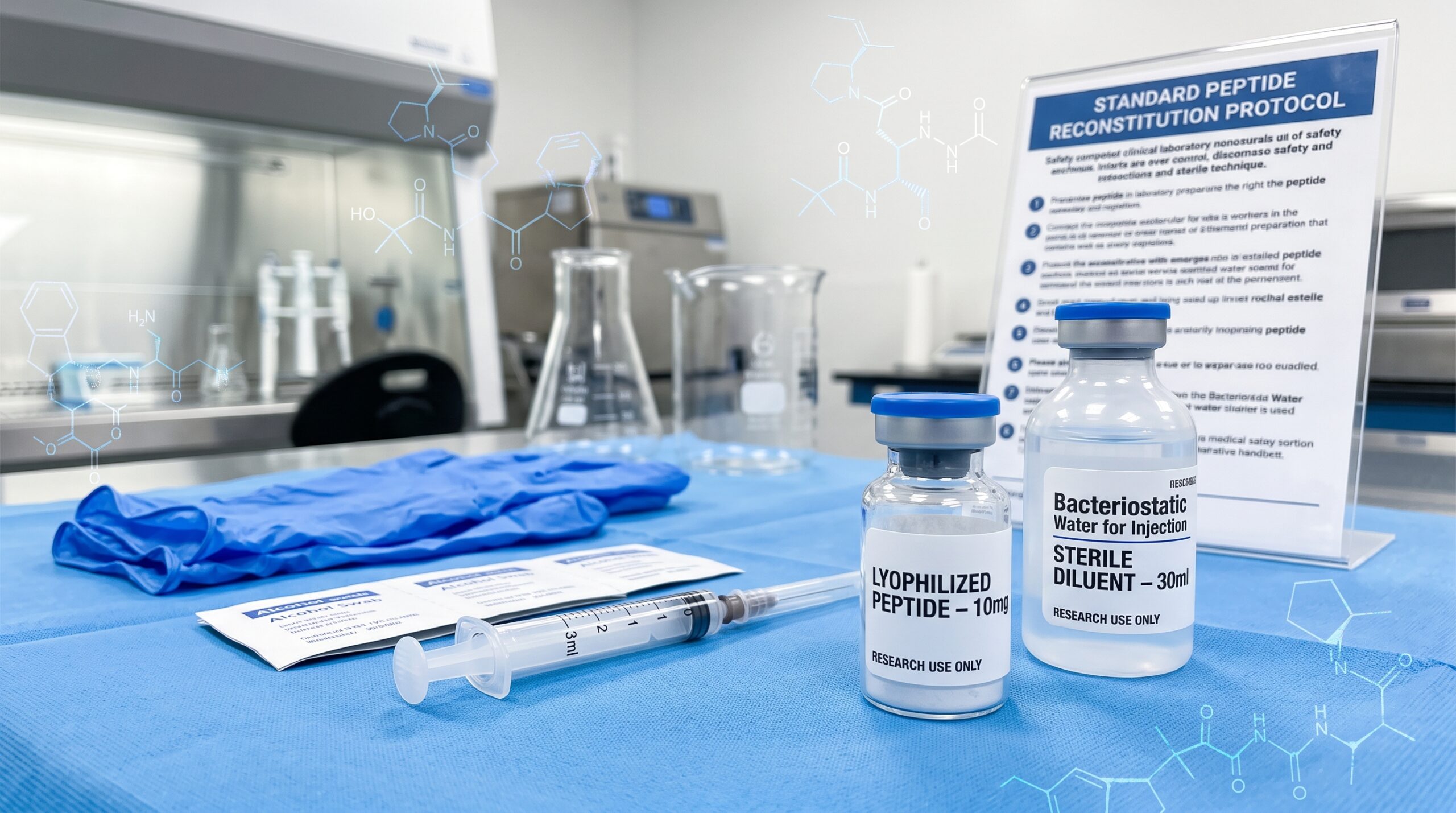
If you have searched for how to reconstitute peptides, you may have noticed that many peptide products are supplied as a dry powder rather than as a ready-to-use liquid. Reconstitution generally means preparing a powdered product with the specific liquid or diluent intended for that product so it reaches the form required by the manufacturer.
However, there is no single method that works for every peptide. The correct diluent, handling process, storage conditions, stability period, and other requirements can vary between products. Some peptides are prescription medicines, while others may be laboratory products that are not approved for use in people.
For that reason, learning how to reconstitute peptides should start with the product label and official instructions rather than a generic internet guide.
This article explains what peptide reconstitution means, why it is used, what to check before handling a product, common mistakes to avoid, and when to ask a pharmacist or healthcare professional.
What Does Peptide Reconstitution Mean?
Peptide reconstitution is the process of converting a peptide supplied in a dry or powdered form into the formulation specified by its manufacturer.
In simple terms, a dry peptide product may need an appropriate liquid before it can be used for its intended purpose. The liquid used for this purpose is often called a diluent or solvent.
The exact process depends on the particular product.
When researching how to reconstitute peptides, it is important to understand that “peptide” is a broad term. Different peptide products can have different chemical properties, concentrations, preservatives, storage requirements, and intended uses.
Why Are Some Peptide Products Supplied as Powder?
Some substances are supplied in a dry form because this formulation may provide better stability during storage than a liquid formulation.
The manufacturer may package the product as a powder and provide specific instructions for preparing it when required.
This does not mean that every powdered peptide can be treated in the same way.
A product’s formulation may determine:
- Which diluent is appropriate
- How the product should be handled
- What temperature it should be stored at
- How long it remains stable after preparation
- Whether it is intended for human, veterinary, or laboratory use
- Whether special handling is required
Therefore, how to reconstitute peptides is not a question with one universal answer.
Reconstitution Is Not the Same as Administration
Another important distinction is the difference between reconstitution and administration.
Reconstitution concerns preparing a product according to its formulation requirements.
Administration concerns how a medicine is actually given to a patient.
These are separate steps. A person should not assume that instructions for preparing a peptide automatically provide instructions for using or administering it.
For prescription medicines, preparation and administration should follow the instructions provided by the prescribing clinician, pharmacist, or manufacturer.
Why Are Peptides Reconstituted?
The general purpose of reconstitution is to prepare a dry product in the form specified by its manufacturer.
A manufacturer may choose a dry formulation for several technical or stability reasons. What are peptides used for Once prepared according to the product instructions, the resulting formulation may be suitable for its intended application.
When considering how to reconstitute peptides, the most important point is that the intended formulation comes first.
Different Products Have Different Requirements
Two products may both be described as peptides but still require completely different handling.
For example, one product might be supplied as a laboratory reagent, while another might be a prescription medicine. Their intended uses, quality standards, packaging, storage, and preparation requirements may differ substantially.
Even two products containing related substances may have different instructions.
That is why copying a preparation method from an unrelated product can create problems.
Follow the Intended Use
Always identify what the product is actually intended for.
Look for information such as:
- Product name
- Active ingredient
- Formulation
- Intended use
- Manufacturer
- Lot or batch information
- Expiration date
- Storage requirements
- Preparation instructions
- Warnings and precautions
If the product is a prescription medicine, use the official prescribing information and advice from a qualified healthcare professional.
If it is a research-use product, follow the manufacturer’s laboratory instructions and do not assume it is approved for human use.
What Should You Know Before Reconstituting Peptides?
Before researching how to reconstitute peptides, take time to identify the exact product and read its documentation.
This simple step can prevent many common errors.
Check the Product Label
Start with the original product label.
The label should help you identify the product and its intended formulation.
Check the following information carefully.
Product Name and Formulation
Confirm that the product name matches the instructions you are reading.
Do not rely only on a similar-looking name.
Check whether the product is:
- A prescription medicine
- A laboratory reagent
- A research-use product
- A veterinary product
- Another type of specialized preparation
The intended use affects how the product should be handled.
Manufacturer’s Instructions
Manufacturer instructions should take priority over generic online advice.
They may contain information about preparation, storage, compatibility, stability, and handling that is specific to that product.
If the manufacturer’s instructions differ from information found on a forum, social media post, or general website, do not automatically assume that the online instructions are correct.
Storage Requirements
Storage can be just as important as preparation.
Some products may require refrigeration or another controlled environment. Others may have specific protection requirements related to light, temperature, or moisture.
Check the product documentation before doing anything with it.
Do not assume that every peptide should be refrigerated, frozen, or stored at room temperature.
Understand Sterility and Contamination Risks
Sterility is especially important when a product is intended for a sterile application.
Improper handling can introduce microorganisms or other contaminants into a product.
Contamination may not always be obvious.
A product can look normal and still have a contamination problem.
This is one reason sterile products should be handled according to appropriate professional procedures.
Why Contamination Is a Concern
Microbial contamination can affect product quality and may create serious risks when a contaminated product is used in a medical setting.
Other contamination can also occur through unsuitable equipment, inappropriate handling, damaged packaging, or an unsuitable preparation environment.
For this reason, do not treat reconstitution as simply “adding liquid to powder.”
It is a product-handling procedure that may require controlled conditions.
Visibly Contaminated Products
Do not use a product that appears compromised.
Examples of warning signs can include:
- Damaged packaging
- Broken or compromised seals
- Unexpected particles
- Unexpected changes in appearance
- Unusual discoloration
- Unexplained cloudiness
- Evidence of leakage
- Missing or unreadable product information
If you notice something unusual, contact the manufacturer, pharmacist, or appropriate healthcare professional before using the product.
What Materials Are Commonly Associated With Reconstitution?
The materials required for peptide reconstitution depend on the specific product and its intended use.
There is no universal list that applies to every peptide.
Depending on the setting, documentation may refer to categories such as:
- The original peptide container
- An approved diluent
- Appropriate sterile supplies
- Protective equipment
- Proper storage equipment
- Manufacturer-provided materials
- Appropriate waste-disposal equipment
The exact materials should come from the product’s official instructions.
Manufacturer-Provided Materials
Some products may be supplied with specific materials or preparation instructions.
If the manufacturer provides a particular diluent or preparation component, do not replace it with an unrelated product simply because it appears similar.
Compatibility can depend on the chemical and physical properties of the formulation.
Why the Correct Materials Depend on the Product
Different formulations can respond differently to:
- pH
- Temperature
- Concentration
- Solvent composition
- Light
- Agitation
- Storage time
- Container materials
As a result, generic advice about how to reconstitute peptides may not apply to a particular product.
For medical products, a pharmacist can help confirm which materials are appropriate.
Why Following Manufacturer Instructions Matters
When learning how to reconstitute peptides, one of the most important rules is simple: follow the instructions for the exact product.
A general peptide guide cannot account for every formulation.
Different Peptides Can Have Different Requirements
Peptides can differ in molecular structure and formulation.
Manufacturers may also use different excipients, buffers, preservatives, or packaging systems.
These differences can affect how a product should be prepared and stored.
Therefore, two products should not be assumed to have identical preparation requirements.
Storage and Stability Can Vary
Stability describes how well a product maintains its required characteristics under specified conditions over time.
After a dry product is prepared, its stability may differ from that of the original dry material.
The manufacturer may specify:
- Storage temperature
- Protection from light
- Maximum storage period
- Conditions after preparation
- Whether repeated handling is permitted
- Whether the prepared product should be discarded after a specified period
Do not invent a storage period when the product documentation does not provide one.
Do Not Copy Instructions From Another Product
One of the most common mistakes is finding instructions for a different peptide and applying them to your product.
A method that is appropriate for one formulation may not be appropriate for another.
Search results can also mix laboratory protocols, medical information, personal experiences, and unofficial instructions.
Always identify the exact product before relying on preparation information.
Common Mistakes to Avoid
Understanding how to reconstitute peptides also means understanding what not to do.
Several common mistakes can affect product quality or safety.
Using the Wrong Diluent
The diluent is not simply “any sterile liquid.”
Different products may require different diluents.
Using an unsuitable liquid can affect the formulation and may change properties such as stability or compatibility.
Never substitute a different diluent just because it is readily available.
Use the product-specific instructions or ask a qualified professional.
Poor Storage
Improper storage can affect product stability.
For example, exposing a temperature-sensitive product to unsuitable temperatures may reduce its quality.
The same applies to products that require protection from light or moisture.
Read the storage section of the official documentation and follow it carefully.
Ignoring Expiration or Stability Information
Expiration dates and stability information serve different purposes.
The expiration date generally relates to the unopened product under specified storage conditions.
After preparation, the relevant stability period may be different.
Do not assume that a product remains usable until the original expiration date after it has been prepared.
If the documentation does not clearly explain the post-preparation storage period, ask a pharmacist or manufacturer.
Using Contaminated or Damaged Products
Do not use products with questionable packaging or unexpected physical changes.
A damaged seal, unusual particles, or unexplained discoloration should be treated as a warning sign.
When product quality is uncertain, professional advice is safer than guessing.
Following Unverified Online Instructions
The internet contains many discussions about how to reconstitute peptides.
However, online instructions are not automatically reliable.
A forum post may describe a particular person’s experience. A social media video may omit important safety information. A protocol for laboratory research may not be appropriate for a prescription medicine.
Look for information from:
- The manufacturer
- A licensed pharmacist
- A prescribing clinician
- An official product information document
- A reputable medical or scientific institution
This approach helps separate product-specific information from general internet advice.
When Should You Ask a Pharmacist or Healthcare Professional?
There are situations where professional advice is especially important.
Prescription or Medically Administered Peptides
If the peptide is prescribed to you or is intended to be administered as part of medical care, speak with your healthcare team.
A pharmacist can help explain product-specific preparation, storage, and handling requirements.
Unclear Product Instructions
If you cannot determine which diluent or storage conditions apply, do not guess.
Contact the manufacturer or a qualified healthcare professional.
Questions About Storage or Stability
If you are unsure how long a prepared product remains stable, ask a professional.
This is particularly important when the product has been stored outside the recommended conditions.
Concerns About Contamination or Product Quality
If the container is damaged or the product looks different from what the official documentation describes, stop and seek advice.
Do not rely on appearance alone to decide whether a questionable product is safe.
Frequently Asked Questions About Peptide Reconstitution
What Does Reconstituting a Peptide Mean?
Reconstituting a peptide generally means preparing a dry or powdered peptide product using the specific liquid or formulation component designated by the manufacturer.
The exact process depends on the product.
When researching how to reconstitute peptides, always use the instructions for the exact product rather than assuming that one method works for every peptide.
Why Do Some Peptides Come as Powders?
Some peptide products are supplied as dry materials because the manufacturer has selected that formulation for stability, storage, manufacturing, or other technical reasons.
A dry formulation may require preparation before its intended use.
However, the reason for using a powder can vary between products.
Can All Peptides Be Reconstituted the Same Way?
No.
Different peptides and formulations can have different requirements.
They may differ in their recommended diluent, preparation conditions, storage requirements, stability, and intended use.
This is why generic instructions about how to reconstitute peptides should not replace product-specific instructions.
How Should Reconstituted Peptides Be Stored?
Storage depends on the specific product.
The correct temperature, light protection, container requirements, and stability period should come from the manufacturer or official product information.
Do not assume that refrigeration is always required, and do not assume that room-temperature storage is always acceptable.
How Can I Know Whether a Peptide Product Is Safe to Use?
Start by checking the source and intended use of the product.
For a prescription medicine, use the information supplied by the healthcare professional, pharmacist, and manufacturer.
For laboratory products, check the manufacturer’s documentation and intended-use statement.
Also check the packaging, expiration information, storage history, and product appearance.
If anything is unclear, ask a qualified professional rather than relying on an unverified online protocol.
Does Reconstitution Make a Product Safe for Human Use?
No.
Reconstitution only describes preparation of a product. It does not establish that the product is approved, sterile, safe, or appropriate for use in people.
A product labeled for laboratory or research use should not automatically be considered a medicine.
Can I Use Instructions From a YouTube Video?
It is better to use official product information rather than relying on a video.
Online videos may demonstrate a particular product or personal practice without explaining important differences between formulations.
If a video conflicts with official instructions, follow the official product information and seek professional advice when necessary.
What If the Product Looks Different After Preparation?
Do not automatically assume that a visual change is harmless.
The expected appearance should be described in the product documentation when relevant.
If you notice unexpected particles, discoloration, cloudiness, or other changes, contact a pharmacist, healthcare professional, or manufacturer before using the product.
Why Is Sterile Handling Important?
Sterile handling helps reduce the risk of introducing microorganisms or other contaminants into products that require sterility.
The appropriate procedures depend on the setting and intended use.
Medical preparation should be performed according to applicable professional standards and product instructions.
Key Takeaways
Learning how to reconstitute peptides starts with understanding that there is no universal preparation method.
The most important points are:
- Reconstitution means preparing a dry product according to its intended formulation.
- Different peptide products can have different preparation requirements.
- Always identify the exact product before following instructions.
- Use the manufacturer’s instructions as the primary source.
- Do not substitute an unapproved or unrelated diluent.
- Pay attention to sterility and contamination risks.
- Check expiration dates and post-preparation stability information.
- Follow the specified storage conditions.
- Do not use damaged, contaminated, or questionable products.
- Do not assume that research-use products are approved for human use.
- Avoid copying instructions from unrelated products or unverified websites.
- Ask a pharmacist or healthcare professional when instructions are unclear.
Conclusion
Understanding how to reconstitute peptides is less about memorizing one universal procedure and more about following the requirements of the exact product.
Peptides can differ in formulation, intended use, stability, storage requirements, and handling needs. Because of these differences, a method that applies to one product may not apply to another.
Before handling a powdered peptide, check the product label, manufacturer instructions, storage requirements, expiration information, and intended use. For prescription or medically administered products, consult a pharmacist or healthcare professional when you need clarification.
The safest approach is simple: use product-specific instructions, maintain appropriate handling conditions, and never guess when important preparation or safety information is unclear.